Core Web Vitals are Google’s measures of how a page feels to the people using it: how quickly it loads, how quickly it responds, and whether it jumps around while it does. They’re part of how Google ranks pages, and more importantly, they track closely with whether visitors stay or leave.
The three numbers
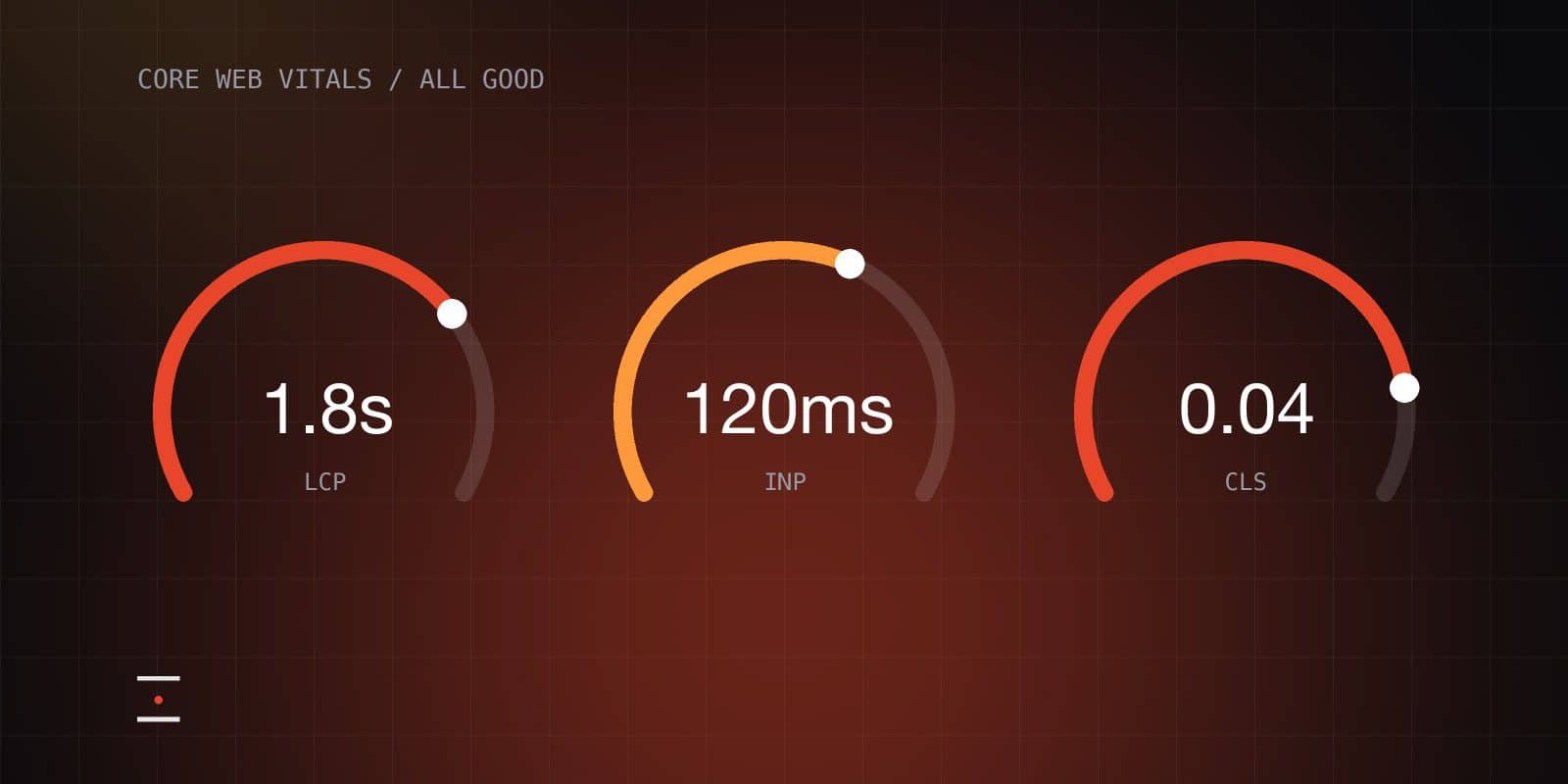
- Largest Contentful Paint (LCP) is how long the main content takes to appear. Aim for 2.5 seconds or less.
- Interaction to Next Paint (INP) is how quickly the page responds when someone taps or clicks. Aim for 200 milliseconds or less. INP replaced the older First Input Delay measure in March 2024.
- Cumulative Layout Shift (CLS) is how much the layout moves while the page loads. Aim for 0.1 or less.
Google measures these from real visits in Chrome and looks at the 75th percentile, so three out of four visits need to hit the target, not only the ones on fast office broadband.
How to check your site
Put your address into PageSpeed Insights. The section at the top shows real visitor data if your site gets enough traffic. If you use Google Search Console, its Core Web Vitals report shows which groups of pages pass and which need work.
Why sites miss the targets
- Large images. A photo straight off a camera can be several megabytes. Resizing and serving it as WebP or AVIF often cuts that by 90%.
- Too many plugins and scripts. Page builders, sliders, chat widgets and tracking tags all add code that the browser has to download and run, which hurts INP in particular.
- Slow hosting. If the server takes a second to respond, the page can’t start loading until it does. Cheap shared hosting is a common cause.
- Missing image sizes. Images, embeds and banners without set dimensions push content down as they load, which is what CLS measures.
How we build for speed
We hand-build lightweight WordPress themes instead of using heavy page builders, size and compress images properly, and host sites on tuned servers with caching. Speed is designed in from the start rather than fixed afterwards. If your site is slow, get in touch and we’ll tell you what’s holding it back.